For My Young Friends (And maybe the not so young ones also)

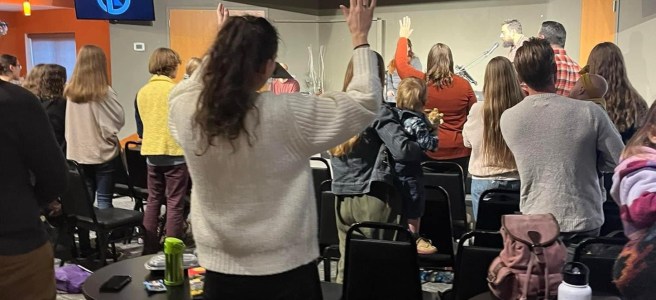
From my vantage point at the back, I noticed her radiant smile and his hand raised in worship. Two worshipers juxtaposed across my line of vision. These teens unashamedly and joyfully responded to God, their faith in Jesus on display, and it brought me to tears.

I had spent the worship service much like I spend it every week— passing out paper and markers, rummaging for other quiet activities to keep little hands busy and little voices quiet, hearing bits and pieces of the sermon, bouncing a baby on my hip, whispering variations of “Shh time to stop talking, Pastor Shayne is praying.”—in short, doing every thing I could to keep my children from distracting others. 

Our small church doesn’t have a children’s ministry, so everyone is together. I love much about this arrangement. My children experience all the aspects of church together. They can tell you what the communion elements mean and why we celebrate it every week. They see adults pray and sing.They get to see Daddy play the guitar and preach sometimes. But I’d be a liar if I said it is easy. Sometimes I’m bone tired, weary, and wish I could listen to the sermon without my four little “distractions” in tow. Sometimes I hand out markers with an overwhelmed, grudging heart. And more than once I’ve wished I could send them along to their own classes and call it a day.

So it was at the end of another such service when I noticed two teenagers simply, humbly, worshiping. Neither was putting on a show or drawing attention to themselves. Several thoughts intersected in my mind—

“Is it even worth it?” I’ve asked myself. “Are they taking in anything? Am I teaching them they can worship too, or to just be quiet so the adults can concentrate?” 

First, the teens’ sincerity deeply encouraged me and spurred my own heart to respond. The worship service was not about me or whether I was inconvenienced. It wasn’t about being able to sit with rapt attention in the front with a notebook and pen in hand. Worship is about God. And my heart needed to remember I can worship even when it’s not easy and doesn’t look the way I long for it to look. And how does my attitude seep through to my children? What are the messages I’m sending? My self-focus almost missed something beautiful—the heartfelt responses of others around me, and the opportunity to bow my own heart to God.

The body of Christ is such a marvelous gift. They probably had no idea anyone was watching, but I needed the testimonies of these young ones— their radiant smiles and raised hands. I needed them to encourage and convict. 

The teenagers at our church are fantastic, and not just these two. All of them seek ways to help and serve. I see their willingness to use their gifts and desire to grow in their faith. They participate in community group and add thoughtful comments to the discussion. They give me so much hope for the next generation.

They give me hope that my small people see them also. 

And they do. “When I’m a teenager I’m going to sing and play the guitar at church!” sweet voices proclaim. 

Secondly, I breathed a prayer, “Oh that I would get to see my own children worshiping with joy and zeal! Lord let the Word fall on good ground. Let its roots grow deep. Let it produce fruit one hundred fold.” In the soil cultivating, seed planting days we pray for rain. Harvest seems so far away.

Yet these teens are not so far removed from their childhood—and God is clearly at work. My children not only see adults who love Jesus, but they also get to observe some who are closer in age. These young friends are seed planters also, and they may not even know it. 

And I remind myself that all these hours gathering with the church are not wasted. God is using this time. Small people begin to understand Jesus is not just a word, but a real, living person, the Savior whose body was broken and whose blood was poured out for them. They see he’s worth the center, the focus of our affections. 

Finally, I also knew a moment of grief for another teenage girl, exuberant, “on fire” for Jesus with faith largely untested who knew God could move mountains. She was the girl serving any way she could, eager to go on mission trips, work at camp, and change the world. She dreamed of doing “big things for God.” Limitations? Nah. God could do whatever he wanted. I was that girl. At fourteen my life had turned a 180 and I’d never looked back. 

“Take my life and let it be consecrated Lord to thee,” I prayed upon many a church stair. 

So I grieved the girl with fewer scars and big expectations, the girl with a fresh face, not yet battle worn. For a moment I missed the days when the Christian life seemed limitless. Big things were on the horizon. Opportunities abounded. I couldn’t wait to see what this wild and wonderful life held.

I also missed the freedom of young adult days, when limits and responsibilities still were few, when I could give myself to the ways I wanted to serve God. Life has a way of looking nothing like one expects, however. Even the things we long for, pray for, and dearly love feel lack luster some days. Answered prayer may be a delight, but the life we craved more difficult than we knew. We sing “Father use my ransomed life in any way you choose,” and mean it. But sometimes we wonder if what he chooses truly is best.

Time and trials refract our big dreams, bending them with changed perspectives. I can grieve that zealous, enthusiastic teenager, but also be thankful the Ami in her 40s looks radically different than her. And if I live long enough, the Ami I’ll be in my 80s will also be radically different than the me I am now. Life lived brings maturity, wisdom, and more shades of gray- not everything is black and white. Mercifully, sanctification is progressive.

Perhaps God doesn’t have big things for me to do right now. Perhaps I need to learn faithfulness in the small things. 

Limitations aren’t always a bad thing— The King of the universe limited himself. The limitless one took on limits, fences, boundaries. He put on skin that sweat, stank after a long day, and needed washing just like his brothers. He put on a body subject to fatigue and illness. He limited his understanding so his brain would develop like the other children around him. Ultimately he limited his power, and refused to rescue himself that we could be rescued. 

So maybe my limits are also good.

Maybe I need to remind myself. “Do small stuff for God. Despise not every day faithfulness.” In the upside down (or truly right side up) Kingdom of Christ, small things become big things.

I’m not here to be a cynic, or rob my young friends of zeal or big dreams. Please keep dreaming guys! For truly nothing is impossible for God. You could indeed be a William Carey or Amy Carmichael. Or for more modern references – a Jackie Hill Perry or David Platt. 

The Kingdom still needs dreamers, and the weary moms in the back need you.

But I’ll tell you, young friends, the plans God has for you probably look much different than the plans you have for yourself. The road will take unexpected turns. There will be more thorns and storms than you’d like to think. The valleys may be exceptionally deep. But, there will also be more fragrant flowers and more ravishing sunsets than you can imagine. 

God’s path is hard. But God’s path is worth it. There are indeed higher joys and deeper peace as we learn Christ.

We like to tell the young “God has a spectacular plan for you. He could use your life in mighty ways.” Young friends, we are not lying to you. But perhaps God’s spectacular plan, the mighty things he can do in and through you aren’t visible things. Maybe mighty isn’t always a public platform or large influence.

Maybe spectacular is a heart with bed rock, unshakeable faith. Maybe spectacular is one who gives the shirt off his back. Maybe spectacular is doing the unseen things, without commendation or applause. 

Also, I think we misunderstand spectacular’s time frame. What if we don’t see spectacular in this life? All we need do is step outside or glance at a headline to remember much in a fallen world is definitely not spectacular. So we orient our hearts to eternity, where there’s much we do not yet know. However, without doubt we do know it is there that “God has a spectacular plan for you” comes to its full and marvelous fruition. Look to Jesus—eternity will be beyond spectacular. 

So young friends, set your eyes on the cross. Since we know spectacular will come, you can confidently lay your dreams at his feet. He may shape them, mold them, ask for them, or strip them away. But if he does, know you have a Father who is always good. He might take your dream, remake it, and hand it right back to you when the time is right. Or he might replace it with a different dream. Either way, his plan is better. 

Better doesn’t mean easier, a life always marked by sunshine and cool breezes, but it does mean he is there. And it does mean he is sovereign. And it does mean he is always kind. And it does mean you can trust him. 

Keep on worshiping with a sincere heart. Keep outwardly responding. Hang on to your enthusiasm, and let God’s light shine through. There’s a weary mom at the back who needs you.

A Real Conversation About Postpartum Depression

It was the macaroni that did me in. 

About a month before Clara was born, a normal day at home suddenly became one of deepest days I’ve ever had, complete with unstoppable tears and full blown panic. I’m no stranger to big emotions, and have spent a lot of life processing them. But I hadn’t gone “walls closing in” deep since the early days following Jon’s death. 

I’ve written about tears more than a few times, but while the world is still broken, we need to talk about them. Spoiler, I’m not crying nearly as much these days. But we’ll get there. First things first.

All morning Satan barraged my heart with lie after lie. He knows just where to get me when I’m weak. 

“You don’t handle life nearly as well as everyone around you.” 

“You can’t reach out to someone; then people will know how messed up you are.” 

“Other people have much deeper stuff going on than you.” 

“You don’t always want to be the broken friend.” 

“You are failing and inadequate.” 

“You have no value to add to the Kingdom.”

“Why do you have such deep emotions all the time? Just push them aside.”

“Nobody wants to be around someone struggling so badly.” 

“Just pull yourself together and stop crying.”

“What’s wrong with you?”

And on and on and on. Sound familiar?

Stress upon stress pressed on my shoulders. It wasn’t one earth shattering thing, but a compilation of all the ”little” things crashing down. My ear was still ringing, sometimes very loudly, sometimes quietly but always constantly. And my head had been hurting behind that ear. It was still a challenge to distinguish speech during competing noise and overlapping sounds. In a house with little children, there is almost always competing noise.

My body had begun its favorite thing during pregnancy—many contractions, early. Combined with a history of other complications, contractions meant high alert. They meant weekly visits to the OB and constantly paying attention to determine if we needed to head to the hospital. While I was immensely grateful to be carrying Clara, a high risk pregnancy is a draining place to be. 

Furthermore, all of our kitchen appliances had broken at the same time. While it’s definitely a first world convenience, over a month without a dishwasher will wear a pregnant woman down. We had a warranty on it, but it still took hoop after hoop for it to be repaired.

My children are some of God’s best gifts to me. Yet the physical toll of pregnancy while caring for three little ones with need after need was overwhelming. Ever erupting chaos felt paralyzing. Ironically, I don’t mind messy play at all—paint, play doh, water, kinetic sand— you’ll find these often at our house. But that day it was too much.

And then there were other more private things. Biggish things that weighed heavily; I felt like I needed to hold it all together and hold everyone together. I couldn’t fall apart. People needed me. 

There was also a little disappointment regarding a writing opportunity, but you know sometimes it’s the small straw that breaks the camel. As my mind and emotions spiraled downward, my dear, small ones bore with me so beautifully, but Mommy being a sobbing mess all morning left their hearts nervous and unsteady.

Henry touched my face and said, “Mommy crying.” 

Charlotte became quiet. 

And Hudson became angry. 

I sat on the couch and watched Henry dump plastic ware all over the floor and then use it to scoop kinetic sand into a bowl. He was playing purposefully, though not skillfully. But I didn’t have the energy to get up and help him, or clean up the mess. 

The scales finally tipped around lunch time. I was working on mac and cheese, mixing ingredients in with the burner off when the tell tale noise of fighting children echoed through the house. I sighed, and went to investigate. Suddenly I heard the unmistakeable sound of uncooked macaroni being poured and the cry of a hurt toddler. 

I rushed back, panicked that Henry had burned himself. He had not, but had pulled a chair to the stove, gotten the half full box of noodles (about a pound) from the island and went to town. He was completely fine, but it was the dry noodles all over the floor, the stove, and in the pot that did me in. I couldn’t breathe, and the walls closed in. I sank to the floor, and let the primal scream come. I can remember only two or three days of panic that big, ever.

When my mother-in-law answered the phone, I could utter only three words, “I need help.” I scared her half to death, but she said, “I’m coming. I’ll be right there. But are you ok?”  

“We’re all physically ok,” I managed. I heard her sigh of relief. 

And she came, no questions asked. She helped with children. She washed dishes and swept the floor. And she let me talk and talk. I also jotted two texts— one to a friend and one to my other mother-in-law (y’all know Jon’s family are still family right?) asking for prayer. 

The pit was deep, so deep it was impossible to climb out on my own. And I couldn’t preach my way out of it either. I tried to speak truth to myself but it bounced off the invisible wall surrounding my mind. 

At my next OB appointment, I mentioned the panic and commented, “I think we need to keep an eye out for postpartum depression after the baby is born.” 

But I was already struggling with it.

It took me four babies to fully understand postpartum depression. I wish had known more about it three pregnancies ago. I might have understood why I felt so crazy. And why in shame I wondered, “Who is this rage monster? Because it’s definitely not me.”

Sure, I had read about it. Sure, I had completed the depression scale at the OB office at my six week follow up. Looking back, I know I struggled with postpartum depression far more than I realized.

Did you know that depression can actually set in during the third trimester? (Raise your hand if macaroni ever caused a guttural scream.) And that it can be worse with each pregnancy? 

Did you know that it can look like anxiety and moments of intense rage? 

Did you know that excessive shame, guilt, being often overwhelmed, and feeling like a failure are also signs of postpartum depression?

Did you know it can take up to two years after pregnancy for a woman to feel like herself again? If you think about the ages of my children, I’ve either been pregnant or breastfeeding (with brief seasons of respite in between) for the last six years. According to that measure, I haven’t been “normal” for the last six years. It’s almost comical.

Add in a few other life changing experiences like the deaths of a spouse and both parents, and it’s been a wild decade indeed. 

Over the next few weeks, the walls closed in, and panic consumed me several more times. More and more I shut myself in a bedroom to escape, or to keep from hurting someone. I thought about getting in the car and driving away. Not for forever, but at least for an undetermined amount of time. 

Intrusive thoughts slipped in. “What would life look like without me in it?” I didn’t formulate a plan, but the depths of my thoughts scared me. 

But there was grace to fight back. 

I sent messages to family and friends to pray. I reached out to the ladies at church. They spoke truth and grace and peace. But I knew I needed to talk to the doctor again. 

“Are you willing to try medication?”

“Yes, I am.” 

I grew up with a parent who struggled for years with undiagnosed depression, so I had always told myself it I ever needed help I would get it. I know what depression does to a family. And I would not let it break mine. I tried counseling before and after Henry was born, but that particular counselor was a joke. I’ve also put in the work of reading parenting books, taking classes, processing past hurts, and applying the gospel.

Medication is not the answer for everyone or in every situation. But for this season, it is an instrument of grace. Ultimately it is God who lifts us out of suffering. Medication is one tool among many to fight a very real, biological problem.

I share this detail because someone might need to hear it. It’s time we talk openly of such things. I decided to start an antidepressant for the sake of myself, and for the sake of my family. The depths of my thoughts, taking care of three children, and edging ever closer to the birth of a fourth demanded urgency.

“But Ami,” says the hypothetical naysayer, “You went through the death of a spouse and never needed medication?”

“Yes, but I had hours upon hours to process, to weep, to write, to untangle the lies. No one needed me, and there weren’t four children clamoring for my attention.”

If my body hurts, it’s ok to get help. If my mind hurts me, it’s also ok to get help. Medical science is a gift of common grace. Living in a time when we have a better understanding of the brain is also grace.

It’s astonishing how steady and even my emotions feel this postpartum. Kindness and patience flow. I had forgotten what it felt like for laughter and play to be easy. I think I had gotten used to a lower baseline of happiness, and thought “This must be the way I am now.” Joy in my family, my calling as a stay at home mom, mundane tasks— all of it is so much fuller. Gone are intense swings between tears and anger, and the fight for joy.

I don’t sit in a worship gathering with my children (for our church is family integrated), and feel consumed with anxiety about what others think of me or them. I don’t worry that people don’t want to be my friends.

I can remember the truth of who I am in Christ. Words of grace and peace fill my heart, rather than words of shame and failure. 

Though it still bears all the signs of life with small children, my house doesn’t feel like chaos. I see the messes, but they don’t crush me. Bringing order to my little corner of the universe is much more joy than drudgery. 

I don’t feel barraged by lies.

I don’t feel broken.

In short, I feel a lot like the Ami I once knew. 

But isn’t there also a spiritual aspect? Of course there is. Pregnancy, postpartum, and parenting (yay unintentional alliteration!) have all taught me so much about Christ.They have an uncanny ability to reveal sin. I have needed to be, and still need to be sanctified. I have needed to rest in the grace of redemption.

However, we cannot deny the reality that there are also biological factors at play in these seasons. We cannot deny depression as a real issue linked to faulty neurotransmitters, and fluctuating hormones. Unlike I was taught so many years ago, I do not believe all problems are purely spiritual or purely physical. 

I know how to preach the gospel to myself and counsel myself with the truth. I’m no stranger to defeating lies. But the intense emotional swings of late pregnancy and postpartum, made it almost impossible to get truth in. I wonder if Satan uses things like fluctuating hormones to make us more susceptible to his lies. 

I don’t despise the deep times though. For God has used them to illumine my heart with truth after truth. It’s in the valley that I’ve seen Jesus the most clearly. It’s the deepest days that have often produced the most fruit in my life. It’s the deepest days that have caused me to write. I know they are necessary and good. He holds our tears in a bottle. He grieves when we grieve. For now, however, it is good to not constantly wrestle with my mind. 

It is good for my family to have the me I want to be back. It’s good for my family to have the me who remembers who I am—a new creation, redeemed, justified, adopted, cherished, beloved, saint. 

I never thought I’d actually struggle with depression. I know Jesus, and he is our only hope in life and death. The gospel is true and it changes everything. Yet, I had to acknowledge there was something seriously wrong. Something that was not just spiritual. And it doing so, it is so much easier to apply the gospel to life and remember it is true. 

So I cry I lot less these days. 

“I waited patiently for the Lord; he inclined to me, and heard my cry. He drew me up from the pit of destruction, out of the miry bog, and set my feet upon a rock, making my steps secure. He put a new song in my mouth, a song of praise to our God. Many will see it and fear and put their trust in the Lord.” Psalm 40:1-3

Medication or no medication, I am confident in the Rock. The work of deliverance belongs to him.

God moves toward his own.

He inclines to me.

He hears my cry.

He lifts me up 

He secures me.

God is not apathetic to cries for mercy, rather he delivers us and sets us upon an unshakeable foundation, that is the Christ. He drew me out of the pit long ago in salvation. And he’s drawn me from the pit of despair many times since then. 

“As for you, O Lord, you will not restrain your mercy from me; your steadfast love and your faithfulness will ever preserve me!” Psalm 40:11

Unrestrained mercy. 

This is how he moves toward a humble heart. His mercy is not on a leash. We are ever recipients of unchanging, loyal, always giving what is best, faithful, love. With the Psalmist I praise him for his steadfast love. I praise him for relief, for hearing my desperate pleas. 

While the world is still broken there will still be tears. And panic. And worry. And shame. We fight these battles with the truth. They have already been won by Jesus who died and rose again. The truth changes things. But when something biological creates a force field against the truth, we fight with other tools also. 

One day even minds will be redeemed. One day there won’t be deep days. Jesus is making all things new. Ultimately he is where my confident expectation lies.

The other day Henry played gleefully with dry macaroni, pouring it back and forth between bowls, stirring it, and shaking it in measuring cups. Of course, as sensory play always does, it exploded across the living room floor. 

I glanced down at dry noodles everywhere, and smiled.

A Decade. Ten Years.

There’s something about bare, winter trees that captures my attention. At first glance they’re nothing special, merely creation lying dormant. But if you gaze long enough, you might notice beauty in the blank spaces, each taking its own shape, each lovely in its own way. Some days the winter sky behind them is is a flat gray, dreary, sad, and lonely. But sometimes sunlight glimmers through the branches. All of a sudden what was just an empty space reveals a beauty of its own.

Likewise, you can’t see it, but of course something’s going on beneath the surface. Without basic understanding of seasons, one might look at a winter tree and presume, “Dead, dead, dead.” How could life possibly come from something so barren and brown? Yet if you’ve lived even a few years on this earth you know in just a little while new buds will burst from those branches followed by a canopy of fresh green. 

Spring does indeed follow winter. Always.

Sometimes winter is unbearably long, arduous and harsh. Buy there’s hope in the blank spaces, beauty even in dormancy. Eventually the sun peeks through and warms those trees. The sky behind the empty spaces turns a striking, brilliant blue, and shifting clouds wander lazily behind.

It was winter when he died, a brutal northern Illinois winter, frigid with layer upon layer of snow. Winter in the midwest had been culture shock to my southern girl soul, but now it was agony. It snowed again the day of Jon’s funeral, and dear men from church stood out in the elements all afternoon helping people find parking, shoveling, keeping the sidewalks salted.

I wore a dress more fitting for warm breezes than zero degrees. Colors. I had to have colors and not black. My flats were a rich royal blue.

Funerals are not for widows. They are for a couple hundred others who knew and loved your husband also, and need to share in grief. I stood at the front of the church for several hours embracing friends, crying with them, letting them feel their sorrow with me. I was surrounded by pictures of Jon, pictures of his family, and pictures of us. There was no casket present, for I could not bear it. 

Grace was thick, palpable, tangible. I let them in. They let me in. 

Then we sang and worshiped. In that way the funeral was for me. It was a chance to glorify God in suffering. Through sobs, with lifted hands the song “All I have is Christ” washed over me.

“Now, Lord, I would be Yours alone

And live so all might see

The strength to follow Your commands

Could never come from me

Oh Father, use my ransomed life in any way You choose

And let my soul forever be my only boast is you

Hallelujah! All I have is Christ

Hallelujah! Jesus is my life.”

I had never sung the words as broken as I was in that moment, but also never as sincerely. And still 10 years later, I cannot sing them without tears. Sometimes I still have to stop singing and let the words sink deep, a silent prayer accompanied by emotion streaming down my cheeks.

A decade. Ten years. What a definitive milestone this seems to be. 

That first winter, trees bore no beauty. Their barren ugliness was a reminder that life would always be winter. No more spring for me, only winter. Without Christmas.

Christ clung to me. He would not let me go. And I clung right back. But it took awhile to believe Spring would actually come again.

After the funeral I escaped downstairs to our bedroom (rather “my bedroom” as I learned to say). Picking up a photo of the two of us, I sunk down on the bed. 

“I’m so proud of you Lovee. I’m so proud. You did so well.” 

Theologically I’d tell you it probably wasn’t him. Humanly, I’d tell you it absolutely was his voice. One cannot know for sure. Perhaps it was just the way the Holy Spirit met me with specific comfort in the moment. Either way, it need not be debated here.

Ten years. I’m letting my fingers do what they did in the early days—type in whatever direction they want to go, not worrying about “polished” or “cohesive.”

I’ve wondered at times what he might think of my ten years older self. There are certainly more fine lines, more stretch marks, and enough grays that I no longer try to pluck them out. I think it’s my hands that shout “40,” though. However, Jon remains in my mind’s eye, a youthful 30. But he had the best laugh lines by his eyes even then. 

More than the physical differences, I wonder what he’d think of the fundamental differences, for it is impossible to walk through the valley of death and not come out forever altered. He might see someone a little more serious. But then again, he always drew out silliness and laughter.

I think perhaps he’d see a more radiant version of myself. I hope. Yet even as I type emotion wells up because I know I still struggle with some of the same old sins. Even now I see parts of me that aren’t so radiant. I’m not as sanctified as I’d like to be.

He might see me fighting for joy in the seeming slog of mundane days. He might see me fail my family and repent, over and over again. 

But I hope if Jon could see me now he’d see a woman still following hard after Jesus. A woman who’s faith and compassion have grown exponentially. I hope he sees one who sees others better and sits with them in their grief.

I hope he’d see a woman gripped by the hope of eternity.

Indeed the confident expectation of a renewed earth, of the death of death itself, of all that is broken restored, of real life, of “further up and further in,” of worship face-to-face— of the full consummation of God’s grand plan of redemption— this spurs me on more than any other facet of the gospel. 

I hope he’d still see “Father use my ransomed life!” resonating from my soul. 

There’s been a lot of life in ten years. So much processing, so much writing. So much growth as new life sprung from a tree burned and charred. 

I can tell you now with the hindsight of 10 years that it’s true. Some aspects of grief never fully leave you. While its weight and effect on daily life diminish greatly as Jesus binds up broken bones and heals gaping wounds, in significant moments grief must be taken out and examined again. Remarriage, pregnancies, the births of my children, motherhood— all of it has had to be processed not only through joy, but also through a lens of grief. And sometimes through fear that had to be squashed by truth.

I’ve also wondered what he would think of me as a mom. I long ago left mourning the fictitious children we never had. But I wonder what he’d think of my precious little ones and who I am with them. 

I also imagine he and David would be good friends. I see conversations about guitars and books. I see David answering Jon’s bold questions with dry humor, and I envision corresponding awkward grins on Jon’s face. I don’t imagine what life would look like married to Jon now, for the life I have now is inextricably mine. David and these small ones are inextricably mine. And it’s a beautiful now.

Some memories fade, some remain crystal clear. The day I made funeral plans, I specifically wanted a gyro for lunch. And then I barely picked at it. What a funny memory to stay sharp over the years. 

Scenes of the night he died also remain. 

Jesus likewise remains. Faithful. Triumphant.

In the early days of grief we don’t get the benefit of seeing what lies ahead. We can only hope. When strength fails, when waves are a tsunami, when mounds of kleenexes lay strewn on the floor, when all we see are barren trees, Jesus carries. The Holy Spirit speaks words of truth and comfort.

We weep and we cling. “God you are good. You always do good.”

People come along and speak words we cannot always speak to ourselves. “He’s not done writing the story.”

If I could I’d gather my 30 year old, crushed self into my arms. I might tell her “Just wait! You’ll see! God is going to do magnificent things.”

But I don’t have a Tardis, and I am not a Time Lord. That’s a good thing, I think. Time travel would not be a gift.  Because maybe those weren’t the words I needed right away. Maybe I just needed someone to sit beside me and weep. Maybe I needed to live it. 

Maybe the valley of death taught me to know Christ in ways I never dreamed. 

Without winter, there would be no spring. Without death, there is no resurrection. It’s winter that taught me my desperate need. Sometimes I still forget, but I learned what it is to long for Jesus. 

Bare trees still catch my attention. They remind me of the valley, of where I’ve been. And as a crisp blue sky, rays of sunlight, and white stratus clouds burst through the blank spaces, I know Spring will come again. It always does.

Behind the empty spaces is the unchanging God who loves me and gave himself for me.

On that fateful Saturday between the cross and the resurrection, all creation lay silent, waiting, holding its collective breath. Had the powers of hell prevailed? Would Jesus rise again as He said?

The dark of night is greatest just before dawn. Winter often seems worse right before fresh buds appear. But his friends didn’t understand. All hope was lost. The Savior was dead, dead, dead apparently not really the Savior at all.

Or so it seemed. As Sunday crept over the horizon, light eradicated darkness. Life burst forth from barren trees! Colors spread through a world painted gray! 

“Up from the grave He arose, with a mighty triumph o’er His foes!” 

As the new life of Spring erupts from the death of Winter, so did Jesus rise. So will we rise.

And perhaps one day Jon will greet me with a bear hug and a radiant grin, even more exuberant than on this side of eternity (if that’s possible). 

“Come on! I can’t wait for you to see Jesus!” he’ll exclaim.

And I’ll utter the only words I can, “Me neither!”

Me neither.

Open Hands in Life and Death

As I held my shaking hands out, palms up, one desperate word formed, “Help!” I knew God understood what I could not pray. Help me open my hands to you, Lord! I sat on a hospital bed, and the steady rhythm of a heartbeat echoed from a fetal monitor. I was twenty-four weeks pregnant, and my placenta had begun to abrupt, or tear from the uterine wall. The delivery of our baby girl seemed imminent. 

Up to that point it had been a smooth, “boring” pregnancy as my ob-gyn jokingly and reassuringly quipped. I’d even had less nausea than with my firstborn.

A gentle breeze and gorgeous, blue sky had beckoned us outside. As I pushed Hudson in the stroller, a sharp, knife-like pain suddenly pierced through my lower right abdomen. I doubled over and then stood, breathing deeply for a minute before I could walk again. 

Not a rookie pregnant lady, however, I didn’t want to overreact and thought the sensation could be round ligament pain. We walked home and sat on the front stoop to rest. I snapped pictures of my grinning toddler in his muscle shirt and red baseball hat. Still feeling some pins and needles pain and cramping, I thought I might need to use the restroom.

I sat Hudson on the floor in the bathroom (because, you know. . . mom life). It was then that I saw blood on the tissue—every pregnant woman’s fear.  I stood and there was so much blood.

Instinctively I glanced to see if my precious girl was in the toilet.

While my nightmare fear (I’m losing her!) crashed around in my mind, I screamed for my husband. “David! David! We need to go to the hospital right now!” Praise God, David had not yet left for work.

He wasn’t crying, but fear etched Hudson’s fifteen-month-old face. I scooped him up and put on my best calm voice. “Buddy, we’re going to get in the car. And Mamoo and Papa will meet us at the hospital. Mommy loves you, and it’s going to be okay.” 

I desperately hoped it would indeed be okay.

As we drove I felt Charlotte kick. She is moving. She is alive.

A Familiar Question

When something is critical, hospitals become a flurry of activity. Medical staff moved quickly, starting an IV, giving me a steroid shot to develop the baby’s lungs, starting magnesium to forestall labor, checking vitals, hooking up monitors, calling an ambulance for transport. Thinking of the frenetic pace still brings up residual trauma from my first husband’s death.

Alone in the room of a major teaching hospital, I called out to God. As I prayed, a vivid question sprang to my mind. What if I take her?

The words felt familiar; I had been in that moment before, where God held someone beloved across my mind’s eye. I do not claim to hear God’s voice audibly, but He has asked me that question three times.

Once he “took” a fiancé through a broken engagement.
Once he took my husband home to Himself.
Once he spared the life of my daughter.

Once I said, “No! God, I’ve waited too long.”
Once I said, “Lord, I want to say yes, but I don’t know that I can. I do know you will help me open my hands if the time comes.”
Once I said, “Yes, Lord. She’s yours.”

Father, you know my hands are open to you. She is your baby. I know you will do what is good. But could you please spare her and protect her?

In His mercy and grace, He did. We had eleven more weeks of countless doctor visits, two more occasions of bleeding, multiple inpatient stays, multiple outpatient hospital trips, along with medications, steroid shots, preterm labor, and contractions for weeks and weeks. We made it to thirty-five weeks before my water broke.

Now she’s a vibrant, precocious three-year-old with a love of marker tattoos and stickers. Still, I open my hands to God. She is still yours. They are all still yours.

I opened my hands and God protected her. 

But let me also be extremely clear. Open hands do not guarantee healing in this life.

I opened my hands when my first husband, Jon, lay motionless under the weight of chest compressions, his airway intubated. I prayed the same prayer. My hands are open. He is yours. But please God, spare him. Nothing is too hard for you.

Yet, much sooner than I ever dreamed, God didn’t heal (in this life, anyway).

God was still good, though. Romans 8:28 assures that He works all things together for our good and His glory. He designs the course of history in ways I cannot understand, but ultimately I trust His providence, “His wise and purposeful sovereignty.”1

A common thread between life and death stitches the words “open hands” over and over. Motherhood, grief, all of life—they are studies in having open hands. None of these things follow the well-ordered designs we create in our minds.

The Savior’s Answer

Sometimes God’s will feels crushing, His mercies too severe. And we cling to our plans as a child clutches a grubby penny though he’s offered far more. But Jesus opened His hands. He opened them wide, and they were nailed to a cross.

“Father, if you are willing, take this cup away from me—nevertheless, not my will, but yours, be done.” (Luke 22:42)

In agony Jesus pleaded that there might be any other way for humanity to be rescued. As He looked into the metaphorical cup, all He saw was wrath brimming and boiling over. He anticipated a depth of suffering that is incomprehensible to us. Yet He lay down His own will, opening His hands to the Father’s perfect plans.

With open hands, He held out far more than we have ever been asked to give. For the first time He knew separation from the Father. He held out His identity, His authority, His riches, His unity, and His holiness. He would become sin personified (2 Cor. 5:21).

When we lay down our lives, we find true life.

If Jesus has truly accomplished redemption and if God is truly who He says He is, then we can hold our hands open to Him. Again and again, we can surrender our plans because His will is better. He does know all things and is in control of all things. When we lay down our lives, we find true life (Matt. 10:39).

And when holding life with open hands feels too big, He meets us with lavish grace. For me it was grace to face the valley of the shadow of death. For me it was also grace to walk through a pregnancy full of complications and the gift of humble submission regarding the timing and circumstances of my daughter’s birth.

It’s strange that it’s almost easier to open our hands in the defining, life-altering moments. But surrender is also daily. It’s the mundane plans that are sometimes hardest to hold out with open hands—the days when a long awaited nap doesn’t happen, when teething keeps us all awake, or when a toddler expresses his big emotions through hitting and biting. 

I have yet to decide what is more life altering, the death of a husband or being a mom. Right now they seem neck and neck. I did them in reverse order, so for me motherhood is sometimes colored by loss. My first husband died when I was thirty, and I became a mother at thirty-five. 

Of course, there are radical differences between the two. The death of a spouse is like being hit by a freight train. Being a new mom is sometimes like hanging on to the freight train for dear life, and sometimes like sitting at a crossroads that is blocked by what seems like a never-moving train. However, being Mama is also full of precious delight.

But the similarities between motherhood and grief are striking.

Both have the potential to crush us.

Both bring us to the end of ourselves.

Both cause us to evaluate our identities.

Both aren’t always what is expected.

Both teach us to hold out our hands, palms open.

Whether in birth, death, or all the in-betweens, God is accomplishing so much more than we can see. And grace empowers our responses.
 

I realized that the deepest spiritual lessons are not learned by his letting us have our way in the end, but by his making us wait, bearing with us in love and patience until we are able honestly to pray what he taught his disciples to pray: Thy will be done.2 —Elisabeth Elliot

1John Piper, “Are God’s Providence and God’s Sovereignty the Same?,” Desiring God, October 20, 2022, https://www.desiringgod.org/interviews/are-gods-providence-and-gods-sovereignty-the-same.

2Elisabeth Elliot, Passion and Purity: Learning to Bring Your Love Life under Christ’s Control (Grand Rapids, MI: Revell, a division of Baker Publishing Group, 2013). Ebook edition accessed at https://www.google.com/books/edition/Passion_and_Purity/rTATEAAAQBAJ?hl=en&gbpv=1&pg=PP1&printsec=frontcover.

The Side Effects of Loss and the Gospel that Heals Them

Almost ten years have passed since my first husband died, and I’ve long left the valley of the shadow of death. I was almost crushed, but now I walk again bearing jagged and radiant scars. I’ve processed and processed and processed, and I know the beauty of a life restored. 

A second husband, three spunky children— life is rich and full again, and grief often seems like a distant memory. But even now some unexpected, long term side effects of loss remain: fear, worry, embarrassment, and shame to name few. 

Recently I needed surgery to have a painful, but (thankfully) benign ovarian cyst removed. Concurrently, my husband has an unexplained mass on his arm, and we’re waiting for MRI results and surgery. Medical concerns still raise a prickle of fear followed by its close cousin, worry. If you checked my phone search history, you’d find a list of symptoms. My fingers sought answers and my heart played “worst case scenario.” I was on the look out for that six letter word that should be a four letter word, cancer. 

Given my first husband died in an Emergency Department after symptoms were missed and mistakes made, it makes sense that I’m more cautious medically. That fear can still so easily overtake me is unexpected, however. It’s been almost a decade, haven’t I walked forward into a new, beautiful life? 

As I cried alone in my car, worry and fear spilling out, I was also surprised to realize I’m still responding to the trauma of death. Memories of emotional pain so intense it was physical still crouch in the corners of my heart…

The complete article was graciously published first by Revive our Hearts, and you can find it here.

Let the Children Come

She was a sad puddle of two year old, face down on the floor.

A combined Good Friday service with another church wound down in the background.

“I want more water!”

“Come here sweet girl. The cup is full. We filled it all up.”

The puddle remained. I held a sleeping Henry.

People flooded through the auditorium doors, and I felt the stares at the screaming child, now stomping her foot.

The puddle turned into a tree, rooted on the spot. And I didn’t want want to wake her brother.

“Charlotte I’m going to go get Daddy and come back.”

I looked back, and she poured the water on the floor.

//

I rocked Henry reflecting on stares and looks from people I don’t know. Church can be a hard place for small people (and their parents).

But stares and looks are trivial compared to the cross.

And the cup.

I offered her clean, cold water. It was there, but she couldn’t see it.

I’ve been the two year old.

“But Lord I want more water!!”

“I am the living water.”

The best, thirst quenching water. It’s Him. And he’s always full, overflowing. He gives and gives and gives.

He even gave himself.
And looked into another cup not full of cool, clean water, but overflowing brimming over with wrath.

It was there, and he could see it. But he drank it all.

Wrath satisfied.

He died for those little stomping feet.

//

“Let the children come,” he said.

There is room for puddles on the floor.

That’s going to come out of me?

He was an irresistible week-old newborn, and it was his first Sunday at church. When his mom held him to her shoulder he bore the trademark “I’m just gonna mold completely to your body” newborn snuggle. Talk about baby fever right there!

And then I thought, “That is going to come out of me? That baby is huge!”

Now, it must be said that this little guy is a perfectly average, healthy baby. He wasn’t a 16 pounder.

Though you’ve likely read between the lines, (and noticed the picture) I should probably bring some of you up to speed. I suppose you can tell that I haven’t written in awhile. I guess there is less need for deep processing in the happy, hustling and bustling seasons. Well, I do write all the time these days, but technical reports for work don’t really seem to count.

Anyway, for those who don’t know me in real life or at least on Facebook, I am 5 1/2 months pregnant with our first child! Hooray!

And he’s a boy! We are so delighted to be having a son. He’s a gift long prayed for. The feeling of little kicks from the inside, hearing his heartbeat, seeing him move on ultrasound; these are among the best things I’ve ever experienced. We already know his name, but I’ll save that story for another day.

But I digress. I met a sweet little newborn at church. He was adorable; thoughts of awe and terror simultaneously flitted across my mind.

“Wow God you are amazing!”

“But someone that big is going to come out of me?”

Being pregnant has produced its own set of fears. Fears about labor and delivery. Fears about parenting. Fear that something would happen to our baby—There I’ve said it out loud. It’s uncharted territory, a completely new avenue in which I am learning trust.

I’ve wanted to be a mom for as long as I can remember. It’s one of those desires that had to be stripped away for me to see what it had become. An idol. It was a dream I had begun to worship, something I thought I had to have to be happy. It was a good desire I had let turn into an ultimate desire.

You may remember that my first husband and I tried to get pregnant for a year and half before he died. God did a lot in my heart over that year and half. But the battle was real and intense. So often I prayed for a child. So often I tried to hold my hands open to the Lord.

And when Jon died, all the hopes and dreams of being a mom shattered also. I remember when I started my period about a week after he died: I crumpled on my bathroom floor and sobbed.

So here I am, turning 35 tomorrow and pregnant! They say I’m of “advanced maternal age.” That makes me smile.

And I am amazed at God’s goodness and grace. In the years of widowhood He taught me much about living with open hands. He was good when my hands were empty. And He is good now.

The day I found out I was pregnant, I again knelt on the floor, tears streaming. Y’all know I have a strong relationship with crying.

“Lord, even from the very beginning this baby is yours. I hold my hands open to you. Do what you want with this little life. I pray you would give us grace to point this baby to Jesus. ”

But sometimes open hands are hard.

We’re five and a half months down this path, and already we’re trying to make decisions for the good of our son.

Am I eating the right foods? Taking the right vitamins? Drinking enough water?

Do I go get a Tetanus shot because I cut my toe on a screw?

The flu. Severe dehydration. “I think we better go to the hospital.”

In all this I’m starting to understand that trusting God with our son is life long. We can try to make the best, most informed decisions but ultimately God is sovereign.

He is weaving this little one together in his mother’s womb. Our son is fearfully, and wonderfully made. How much richer are those words now! God will do what brings himself honor and glory.

We’re going to make mistakes. Sometimes we’re going to have no clue what we’re doing. Maybe a lot of times. I’ll probably freak out. Meltdowns will happen—both from me and the baby.

Sometimes we’ll even sin against him. What?! I’m not going to be a perfect parent?

I see your looks of incredulity, but yes friends it’s true.

Therefore, as I learned to preach the gospel to myself in marriage, widowhood, and marriage again, so must I learn it now.

I’m well aware that my highly sensitive heart and strong need for introspection can lead an internal dialogue of fear. We all have our sin tendencies. So I have to change the dialogue.

  • God is the perfect parent. Therefore I don’t have to be.
  • If God did not spare His own Son, will he spare any omnipotent effort to do good to me? (or to my son?)
  • The cross and resurrection prove that the Lord is trustworthy. He always does what he says he will. Because I have been made alive, new, redeemed I can trust God.
  • My Father has promised to sanctify me. He is committed to transforming into the image of his Son. Therefore, he will give grace to admit when I am wrong. Grace to say, “Mommy is sorry. Please forgive me.”
  • God loves our baby far more than we do.

It still feels surreal sometimes. In a few short months we’ll be responsible to keep a tiny human alive, to meet his needs, to instruct him, to protect, to shepherd him. We pray many things for our baby, but most of all we pray he would know Jesus.  Because who’s the real Shepherd? Who’s the real Provider and Protector? It certainly isn’t me.

That I think, is the sum of what God has called us to do—point him to the marvelous grace found in Christ alone. We are channels, channels only to the one who is the answer to all fears, to the one who fully satisfies.

A Handful of Wilted Flowers

for every momentBright yellow bursts are cropping up all over my yard. Dandelions. Some call them weeds, but I love them. I really do. Reminded of a memory from three years ago….

Happy squeals wafted through the open window. Glancing up, I studied the gleeful, boisterous play. Children climbed on jungle gyms. Some jumped rope. A fierce game of soccer was in full swing, and everywhere there was laughter and innocence. I put my head down on the desk, and contemplated crawling right under it. A tear fell, a wet circle on a stack of papers–“the new normal”.

Sorrow. I let it linger for several heartbeats.

“Pull it together Ami. They need you.”

I lifted my head, soaking up the commotion of recess once more, as if by watching I could trap a tiny part of their joy. How I longed for a return to the carefree.

Day after day I held it together for my Kinders, but melted into sobs on the way home. I’d had to return to work, however. I needed someone to need me.

I suppose I needed them as well.

Often I felt a small, warm hand slip inside mine as we walked down the hallway. Without looking I knew which child it was. He was unusually perceptive for his age, seeming to know just when I struggled the most. Comfort was intuitive.

My littles and I had also gotten to have many conversations about death. And Jesus. And Heaven. And grace. For all that, I was thankful. But some mornings it was a feat just to get out of bed.

Soon I left my quiet sanctuary and stepped into the spring sunshine to gather my gaggle of geese. Faces flushed from play, they fell in line like happy little goslings, fearlessly trusting.

“I picked some flowers for you Mrs. Atkins.”

He beamed, a handful of crushed dandelions stretched out in his chubby little fist. I knelt at his eye level. “They’re so beautiful. Thank you buddy! I love them.”

He threw the weight of himself at me in a the biggest hug a five year old could muster.

They were merely wilted weeds, a bunch of crushed dandelions. But they were more lovely than dozens of roses. Given of a pure heart, out of delight, he just wanted his teacher to smile.

And smile I did.

Thank you Lord for the small graces. Thank you for the rays of sunshine amid the clouds. 

I imagine it’s something like giving to God. The treasures I present are little more than wilted flowers. He’s the God who owns everything. He doesn’t need my dandelions.

I bring my weaknesses, my tainted motives, my sin. I bring no merit of my own.

He brings His righteousness.

So He grins with delight at my feeble, childish offerings. To Him they’re supremely lovely because they are clothed in the righteousness of Jesus. He delights because He looks at me and sees His Son.

When I remember that, I can’t help but want to bring Him all the flowers I can gather. I delight in Him. And as a result. obedience and love flow from the abundance I’ve received– identity, reconciliation, adoption, salvation, inheritance, restoration. And most importantly, I’ve been given Him.

And here’s the thing. I would have smiled at my little Kinder, even he had never brought me a thing. My love for him was not a result of his behavior.

How beautifully freeing.

My Father delights in me.

Placing the flowers in a prominent place on my desk, I smiled again. My Father delights in me. He gives grace for every moment. And sometimes grace is a bundle of wilted dandelions.


You might also like:

This post appeared first at anewseason.net

Here’s to the diving board.

Perfect Love Casts out FearI’ve never been a “dip a toe in the water” kind of girl. I’d much rather jump right off the diving board and embrace the chilly jolt.

Everyone knows it’s easier to acclimate if you go all in, right?

I tend to face life this way also. Decisions are all or nothing, and apathy isn’t a prominent character trait. I’ve been known to rush in, yet most decisions are actually preceded by intense thought and prayer.

But when I jump, I jump.

My husband and I had dated about a month when I told him I wanted to marry him. Indeed it was a bold statement, but I knew he wanted the same.

I like taking risks. Recently, however, a latent fear rose to the surface; I didn’t realize I was still afraid of future suffering. I thought I’d dealt with that one long ago. Apparently it crept up again.

Sitting in front of a man who wants to date me and has embraced my widowhood with immense grace, I finally confronted the sin lurking in the shadows.

“What if I have to walk through death again? If I let this guy in, I could suffer more.” 

Through tears I admitted the fear. Pulling me close, he spoke life giving truth.

“You know God is good. You know He does all things well. He sovereignly leads and plans the best things for your life. You may be a widow again. But you may not ever be. Because of the gospel we don’t have to fear. There is so much joy.”

He’s right.

And just like that I decided to leap. I don’t know what God plans for this man and me, but it’s time to take a risk and see what could be. I need not fear future suffering or future blessing.

For “there is no fear in love, but perfect love casts out fear. For fear has to do with punishment, and whoever fears has not been perfected in love.” 1 John 4:18.

God loves me perfectly. Jesus loved perfectly, even to death on the cross. Therefore, I don’t have to fear.

In How People Change, Tripp calls all the pressures of this life “heat.” The trials, blessings, responsibilities, sufferings, joys, and challenges, temptations—all are heat that produce either thorns or fruit.

At the potential of something new, my thorny response was fear. And in this scenario, fear is sin.

It is a result of

  • forgetting who God is.
  • forgetting what He has done.
  • forgetting who He says I am.
  • forgetting that He has provided everything for a God-honoring life.
  • forgetting that He’s committed to making me holy.

Sometimes I cherish things more than I cherish Christ—

My comfort.

My expectations for a well-ordered life.

My temptations to compare a new relationship with the old.

Therefore, I turn from fear. However, to merely change my behavior would be counterfeit and superficial at best. I need radical heart change.

“At the cross God meets us in our sin and struggle with His heart transforming grace.” -Paul Tripp.

So, I ask. “Who is God and what does He say and do in Christ?’

God is good. He is working all things out for my joy and His glory. (Romans 8) Because Jesus had joy in suffering, when suffering comes I can meet it with a settled confidence— with joy, peace, rest, and even cheerfulness.

He gives Himself.

He provides.

As I view the transforming grace of Christ at the cross, thorns become fruit, and I trust my unknown future to a known God.

As for this guy?

Well, I’m a little giddy. I can’t wait to see what God does next.

Here’s to the diving board.


You might also like

Three Years: A Song of Praise

He Triumphs

Brave because He is Brave

For my Sister: Builder of Bikes


This post appeared first at anewseason.net


You are utterly enjoyable.

You know every ugliness.-2
Stopping in my tracks, I reread the simple statement. And it whacked me in between the eyes like a two-by-four.

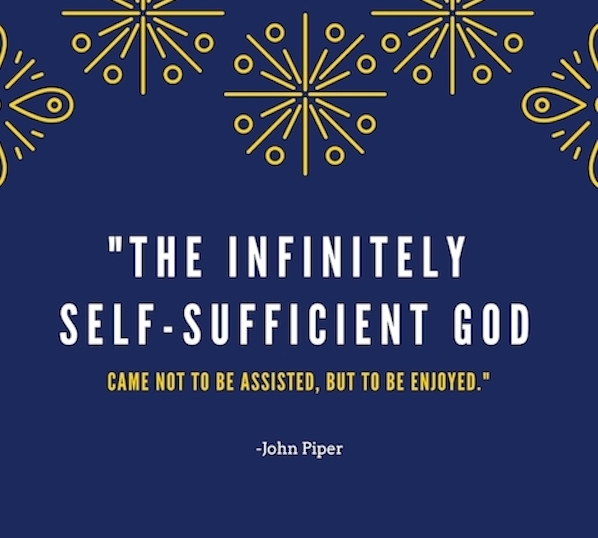
“The infinitely self-sufficient God has come not to be assisted, but to be enjoyed.” – John Piper. 

Enjoyed.

God doesn’t need my help. Jesus came to be enjoyed.

Questions formed. Do I enjoy God? Or do I merely enjoy His things?

How easy it is to love the marvelous gifts I receive from God—life, provision, protection, salvation, comfort, adoption, reconciliation, and on and on. It is good to enjoy God’s gifts. He is a Father who delights to give good things to His children.

But do I enjoy Him more than His gifts?

Had I merely enjoyed the things I received from my husband, I’d rightly be labeled a horrible wife.

But my relationship with Jon was much more than things. I enjoyed his goofy child-like enthusiasm and passionate pursuit of anything he set out to do. I cherished his quirks and all the things that made him distinctly JonI even came to love his “no writing in books” ban.

I adored evenings curled up on the couch together and the warmth of his hand folded around mine. He chose me and loved me despite my flaws. I appreciated his wisdom and discernment. And I savored how his smile could light up a room.

Oh how greatly I enjoyed him! Moreover, how great was our mutual enjoyment!

What about God? How quickly I forget. Often I relish His things more than I relish the Giver. I could rightly be called a horrible daughter.

Ever the writer, I set out to make a list.

“Lord remind me how I enjoy you.”

I enjoy your masterful artistry. The sky is a multifaceted painting, each day ushering a new design. You expertly blend varieties of blues, grays, pinks, and oranges. It’s stunning because you are stunning.

If I enjoy anything beautiful and good, it is because you enjoy it first. Gorgeous sunsets. Music. Laughter and singing. Love. Affection. Deep conversations.

All of these reflect your character.

I enjoy you in the quietness of a rainy day. For you are rest and peace.

I cherish our constant conversation, the ebbs and flows, the picking up right where we left off. Your words flood my heart in seasons of fear and doubt. You are trustworthy. You are comfort; scripture tells me truth when I cannot tell myself.

I love to tell you who you are. Sovereign protector. Redeemer. Provider. God you are holy, merciful, and just.—At the cross they collided harmoniously!

Sustainer. Satisfier. Exalted above all. Refuge. The list is exhaustive!

Furthermore, who I am flows directly from who you are. I know myself accurately only when I first know you. My identity is thoroughly wrapped up in your identity.

  • You adopt.
  • You guide.
  • You lead.
  • You cherish.
  • You secure.
  • You shelter.

Therefore, I am adopted, guided, led, cherished, secured, and sheltered.

I enjoy being thoroughly known and thoroughly loved. You know every single ugliness, even the ones I dare not let others see. Yet you stay. More than that, you enjoy me too! What an unfathomable thing, Lord!

You are the subject of every sentence, the main character of every story.

“He Himself gives to all mankind life and breath and everything.” Acts 17:25

“For thus says the One who is high and lifted up, who inhabits eternity, whose name is Holy: ‘I dwell in the high and holy place, and also with him who is of a contrite and lowly spirit, to revive the spirit of the lowly, and to revive the heart of the contrite.” Isaiah 57:15

With vibrant clarity rings the truth about God.

O Lord I do enjoy you! You are utterly enjoyable.