
Hello dear readers, I genuinely appreciate all those who’ve stuck with me over the years. There has been so much of my heart poured out on this blog. I’m so thankful it’s been a space to process the early tsunami of grief and all the days thereafter, to see reversal, and to share beauty out of ashes. I hope it’s been even a fraction of a blessing to you as it has much as it’s been a gift of grace me. As you know I’ve been a incredibly infrequent blogger these days, and in an effort to be more consistent, be a better steward, and create new pieces to equip and encourage, I’ll be posting most of my writing on Substack from now on. Would you join me on a new adventure in that writing space? I’d greatly appreciate it if you’d click this link to continue reading this article on Substack. But if not, here it is below. Thank you!
_______________________________________________________________________
Sleep draws back its blanket, beckoning me to consciousness, and my brain affirms light streaming through the curtains. Before I move or even open my eyes, I direct my first waking thoughts to a long-standing conversation. We pick up where we left off the night before—
Lord this day is yours, I need you before my feet hit the floor. Let love of small duties and small children grow as I drink of living water, as life giving nutrients pass from you to me. Let words and actions be kind and gentle, your fruit in me ripe and hanging low on the branches, ready for a harvest of righteousness.
Later, books and pencils sprawl across the kitchen table as my son and I sit side-by-side. Anxiety spreads across his young face, but at first glance it’s merely bad fruit, anger and defiance rotting what is pleasant. Take another look. This isn’t rotting fruit, it’s fruit shaken about, tossed by a storm. He fears failure— “Maybe this math is too hard.”
I know this child.
He rages because he doesn’t know how to handle his knotted up soul. Since we’ve been here before, I know what to do. And it is not lecture or cajole. Or threaten with consequences. Or in my own overwhelm, raise my voice—“Just do the math!”
I haven’t always gotten it right, and I still don’t always get it right. But I practice. I abide. I know seeking wisdom from above is the only way to meet him in this place, so I draw from the Vine, “Lord what’s the opportunity here? Give me wisdom and compassion. Keep peace in my heart.”
Most of us would like parenting to fit neatly in a box, with the same prescribed formulas and steps to follow for every scenario, thank you very much. But in real life, with real children it’s not always easy to disentangle what is sin, what is childishness, what is developmental, and where these overlap (because they do). The longer I parent, the more I see the need for moment-by-moment wisdom.
Yes, sometimes the rotten fruit of sin is the primary culprit behind my child’s actions. But sometimes much more is happening beneath the surface. I’m thankful the Lord promises wisdom to those who ask for it. (James 1:5).
“Bud I’m right here. I’m on your side, and I’m here to help. This math feels hard and scary, but I know you can do it. Bravery is knowing this this is scary and trying it anyway. And you are one of the bravest kids I know.”
His body is a tightly curled ball, all 100 pounds of his tall-for-eight frame, compressed, a turtle on a kitchen chair. Anger fades, and tears flow.
My hand on his back, I call upon the True Vine, out loud so my child can hear, “Lord grant peace to my boy’s heart. Still the fears and anxiety. Help him find words to talk to you, to name his fears, and run to you for peace. You say we can cast all our anxieties upon you. You are big enough to carry them.”
We stay there, quiet. And I wait.
Slowly he unfurls, leans in.
“Are you ready? Need a break instead?”
But he picks up his pencil with a new look of determination in his blue eyes. For a moment, it’s as if I see armor making him brave. We talk through the scary thing again. And now it’s not so scary, just another step, not so different from what he already knows.
Lord thank you for the fruit of righteousness. You are the Vine, and you alone produce good fruit. Thank you for this particular moment of harvest.
At almost three decades connected to the Vine, prayer has become like breathing, constant, necessary, and automatic. Habit and sanctification have trained my mind; desperate need and delight have compelled my heart.
I know I need Jesus. I need him not just academically, but at the deepest experiential, root level.
Parenting, in particular causes me to turn and turn again to Jesus. Though I’ve always worked with children, my own small people bring me to the end of my patience in a way I never would have expected. Without Christ, I don’t and can’t parent them the way I want to. When I neglect to turn to the Holy Spirit for help, my flesh rears its ugly head more often than I’d care to admit.
I pray not because it makes me abide. I pray because I do abide. Conversation with God flows out of a deep rooted sense of who he is and what he’s done for me. Because he abides in me, I abide in him.
Being connected to Jesus was so important, that even as he headed toward death, he included the idea among his last words to his disciples.
Urgent Instructions
“Let us rise and go from here.” (John 14:31b)
And Jesus stepped into darkness. Imagine the scene. Jesus and his disciples have just left the upper room where Mary anointed him with costly perfume, where God himself washed filthy feet, where he prophesied Peter would deny him, where he declared Judas would betray him. With reeling minds, the disciples try to process the rapid events like children drinking from a fire hydrant.
As they walk, the narrative is a speeding train, propelling itself toward its climax. Jesus walks as a man headed to his own execution, but not as a dejected or defeated prisoner. His is a single-minded focus. Whereas Judas walked into darkness toward his own destruction, Jesus walked into darkness so we would not be destroyed. He’s still their teacher. He’s in complete control, and he has a few, last, urgent words to tell them. Even has he heads toward death, he focuses on his friends’ needs with overflowing compassion—it’s important he prepare them for what’s to come.
It’s easy to imagine they walk past a vineyard that provides the perfect, concrete backdrop for his instruction.
“I am the True Vine, and my Father is the vinedresser.” (John 15:1)
In the old testament, Israel, compared to a vine, foreshadowed what was to come. But Israel failed to produce good fruit. Jesus contrasts Israel’s fruitlessness to his fruitfulness. Because Jesus is the genuine vine, believers can rest in two truths— we will abide, and we will bear fruit.
We will Abide
Early in my Christian faith, as a teenager and fledgling believer, I remember first hearing John 15 preached. “Abide in me and I in you…” Most of the sermon is lost to time, but I recall feeling the crushing weight of responsibility. I had to abide. I had to abide.
“If anyone does not abide in me, he is thrown away like a branch and withers.” (15:6)
And if I didn’t abide, like a dead branch I’d be thrown away because it meant I never truly believed in Jesus. What if I didn’t truly believe? What if my efforts to abide weren’t good enough? What confusing and terrifying ideas for a few months old, baby Christian. To the preacher’s credit, I might have missed something.
I’m thankful for growth over time, for wisdom, for instruction, for shepherding, and new understanding. Abiding isn’t about my boot-strap efforts to keep myself connected to Jesus. It’s not even about my failures to obey always. I’m not the one who keeps me connected to the vine. Jesus, the True Vine, keeps his own. (John 10:28)
I long to continue abiding in Christ, but I also rest knowing I always will. Jesus, the True Vine, grafted me in and has kept me ever since. Because he first connected himself to me, I stay connected to him.
While followers of Jesus do have responsibility to continue in daily relationship with Christ, we also know that genuine followers will continue in relationship with him. (15:3, Philippians 1:6) Effort flows out of identity, not the other way around, and fruitfulness is a result of our position in Christ. He initiated the work. (15:5) There must first be a vine before there can be branches, and branches grow only because there is a vine.
At our house we have an exceptionally toddlery toddler. We also have a sapling peach tree, purchased this year and newly planted. It bore eight remarkable green spheres, and we looked forward to a delectable pie. One day, as toddlers do, our tiny girl noticed the tempting little balls. Sadly, there will be no pie for us after all.
“Oh Clara, did you know that the peaches needed to keep growing? They can’t grow bigger unless they are attached to the tree.”
“Mommy, you can put them back on the tree,” her tiny voice proclaimed confidently.
“Well, even if we tape them on, they won’t grow anymore.”
Trying to connect ourselves to the vine is like trying to use duct tape or super glue to attach a branch to a tree. The branch may look connected for a time, but without life giving sustenance flowing from vine to branch, eventually the branch will wither. It certainly won’t produce the fragrant blossoms of new life, and that withered branch is good for nothing except fuel for the fire.
Jesus said, “I am the vine, you are the branches. Whoever abides in me and I in him, it is he that bears much fruit, for apart from me you can do nothing.” (15:5-6)
Saving grace and regeneration belong only to Christ. Without him, it’s impossible to save ourselves. A dead branch can’t rise up, and it certainly can’t graft itself in to the vine.
No doubt Judas is fresh on the disciples’ mind as they walk. He had been with the Jesus for three years and played the game so well, no one pinpointed him as the betrayer. But he’d merely glued himself to the vine. It’s a weighty thought and a call to examine oneself. Am I truly connected to the vine? But it’s also not meant to induce fear or terror. It’s meant to produce rest.
As Jesus and the disciples near the Garden of Gethsemane, Jesus prays aloud pleading, “Holy Father keep them in your name, which you have given me, that they may be one, even as we are one. While I was with them, I kept them in your name, which you have given me. I have guarded them, and not one of them has been lost except the son of destruction, that the Scripture might be fulfilled.” (John 17:11-12)
While he was with them, he protected them and guarded them from falling away. And he boldly declares that not one of his true followers was lost. I can’t read this prayer without imagining Niagara Falls— Jesus’ prayer roars like the thunder of water rushing over a cliff and crashing to the rocks below. It’s like he cannot contain his love and care for them.
“I have kept them!”
As he kept them, the Father keeps us. The disciples overheard a brief moment of the never ending conversation between Father and Son, but the Son still pleads. He still intercedes. He still calls on the Father’s faithfulness. (Hebrews 7:25)
If abiding was the only gift of the Vinedresser, it would be enough. But it get’s better. We’re not just branches grafted to the vine. We are branches destined for fruitfulness.
We Will Bear Fruit.
Prayer, worship, obedience, joy, faith, and, trust are all examples of how believers abide in Christ, but also they’re also fruit of abiding in Christ.We produce fruit because we know Jesus. In theological terms, we call knowing Jesus, justification—We were declared innocent, called righteous by the blood of Christ. We rest knowing, nothing can cut us off from the vine. Likewise, being a new creation in Christ, being connected to the vine—this is in itself, also fruit.
And we rest knowing the vinedresser is a master at his craft. He will do what is good for us, that we would produce much fruit. He’s not a lazy gardener content with scant, sour fruit. Rather because he loves us, he desires we’d produce abundant fruit, dripping from the vine, beautiful and decadent. And he is committed to that growth.
I love the idea of growing things, though I’m not always excellent at execution. Last summer, I tried a bit of “chaos” gardening—throw the seeds in the ground, and see what happens! Hooray! But as one might expect, my chaos yielded little fruit. I should have thinned my sprouts to give my crowded plants space and nutrients. I should have cut off brown, dead leaves. The best gardeners know that to produce more and higher quality fruit, they must prune the dead parts of the plant.
One way to describe the Father’s pruning is sanctification. Sanctification is the process where we are transformed to be what God has already declared us to be. It’s the life-long reality of becoming more like Jesus. When the Father prunes, he cuts away aspects of our lives that are fruitless, that we would produce more fruit.
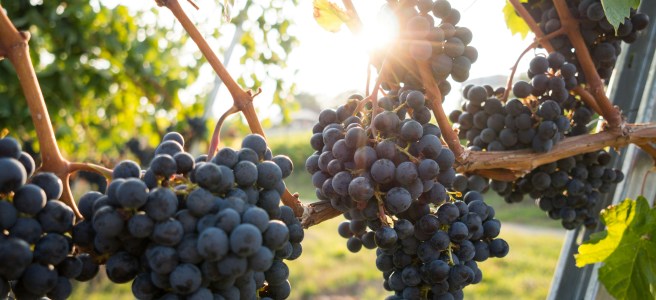
Pruning sometimes looks like God withholding something we think is good. Sometimes it’s removing something we have begun to worship— that thing we think we think we need to make life work. Sometimes it’s conviction of sin. Sometimes it’s trials. Being pruned is far from fun or easy, and sometimes it feels like a mercy too severe. But the end result is always good. (Romans 8:28) If we surrender to God’s work, it produces abundant fruitfulness. Pruning can make us the most flavorful, most tightly packed grapes, fit for costly, rare wine.
Because he loves us the Father desires we bear much fruit. Fruit proves we belong to him. Fruit glorifies him. (John 15:8) And fruit brings us abundant joy. (John 15:11)
Oh friend, what hopeful truths these are! You are not left to your own devices. You are not called to bootstrap your way through life. The Vinedresser grafts you in and works on your behalf. He ensures you remain in him, guarded, kept, and protected from storms that would rip you from the vine. All he calls, he equips.
“You did not choose me, but I chose you and appointed you that you should go and bear fruit and that your fruit should abide.” (John 15:16)
He chose you to abide. Therefore, abiding is delight, and fruitfulness is a gift. The Vinedresser is your confident expectation, and he will produce a harvest of righteousness in you as you drink from living water, and as life-giving nutrients flow from him to you. Believers rest in this astonishing hope today.


